
by Georgi Todorov | Oct 3, 2026 | Living Green, Science
No. Natural gas is not a renewable energy source. It is a fossil fuel that formed over millions to hundreds of millions of years, and the supply in the ground is finite. The one exception is renewable natural gas (RNG) made from landfill and farm waste, which the EIA...
by Georgi Todorov | Oct 3, 2026 | Living Green, Science
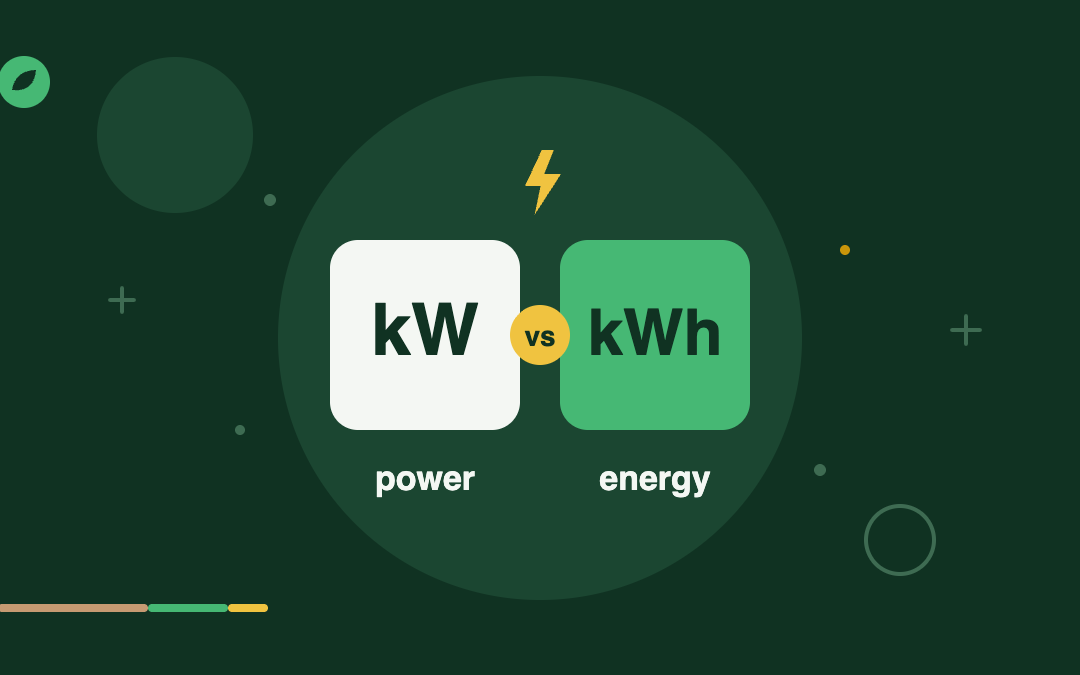
A kilowatt (kW) measures power, the rate at which electricity is used or produced at one moment. A kilowatt-hour (kWh) measures energy, the total amount used over time: 1 kWh is 1 kW running for 1 hour. Think of kW as speed and kWh as distance. Your utility bills you...

by Georgi Todorov | Oct 3, 2026 | Living Green, Science
A typical new US land-based wind turbine (3.8 MW) produces about 11,300 megawatt-hours (MWh) of electricity a year, enough for roughly 1,050 average American homes. That works out to about 943 MWh a month, 31 MWh a day and 1.3 MWh an hour on average. The exact number...

by Georgi Todorov | Oct 2, 2026 | Living Green, Science
An emission factor is a number that converts an activity into greenhouse gas emissions, for example kilograms of CO₂e per kWh of electricity or per litre of diesel. Multiply your activity data by the right factor and you have your emissions. Every carbon footprint,...
by Georgi Todorov | Oct 2, 2026 | Living Green, Science
CO₂e, short for carbon dioxide equivalent, is a unit that expresses the warming effect of any greenhouse gas as the amount of carbon dioxide that would cause the same warming. It lets you add different gases, such as methane and nitrous oxide, into one number. Every...
